Emotional State of Matt #17: FAITHLESS
Updated: Jun 2
So far on this blog, although I’ve offered my hot takes on topics from fine dining to the Alien franchise, I’ve tried to avoid writing about divisive subjects. I’ve met a vast number of people across the country with all different of viewpoints, many of whom read this. I want the story I tell to feel inclusive.
Is it necessary for me to share my views on religion? Certainly not, but it’s impossible to ignore Christianity when exploring the 50 States. My personal views on it inform my experiences, I feel strongly about my views, and this is 50 States of Matt, so I’m going to subject you to them anyway. If you think you might be offended by, or have no interest in, what I have to say about religion, maybe just skip past this post and go to another one.
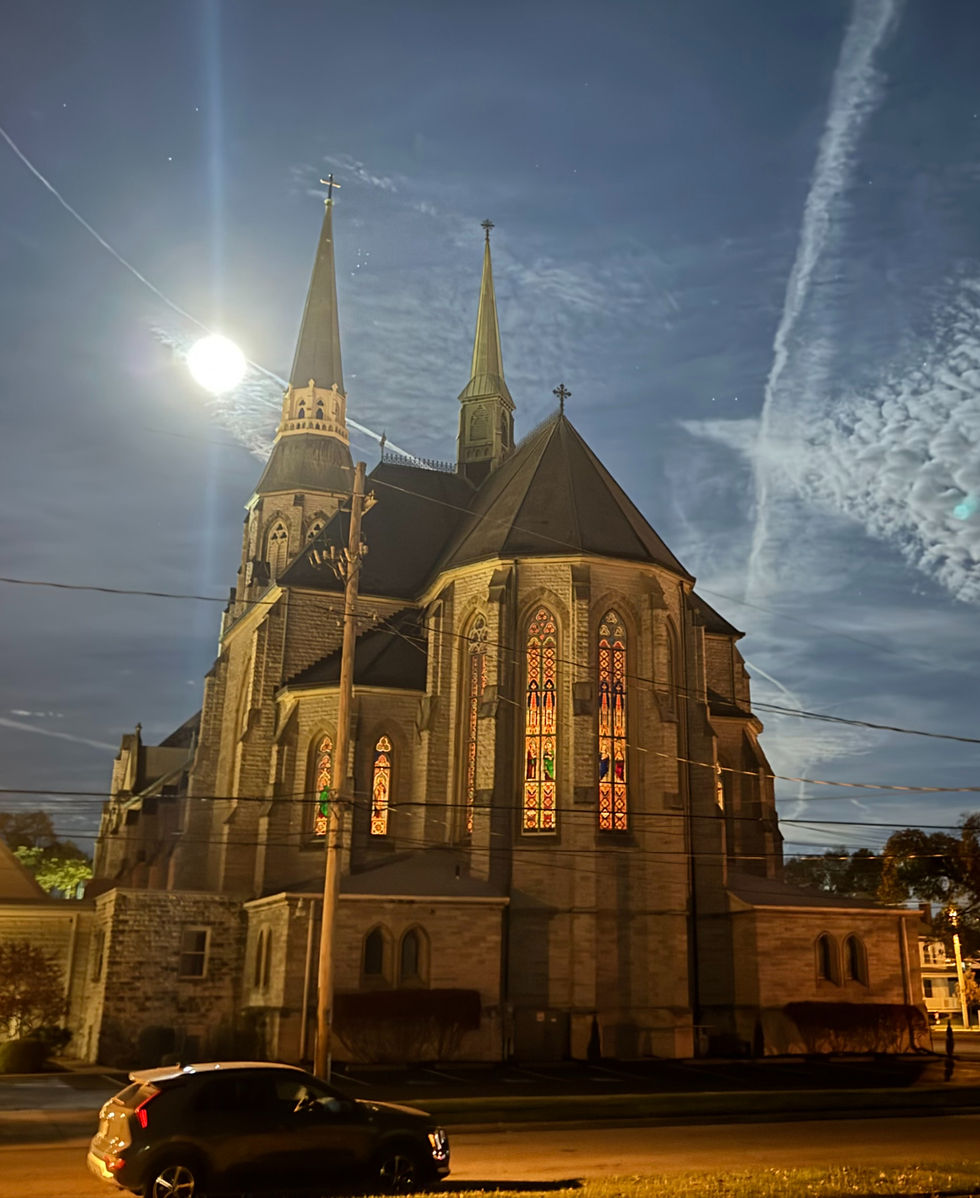
Despite The United States Constitution being a secular document, the majority of US citizens have been Christians since the nation's inception. Parts of the US, like the Bible Belt in the South, tend to be more vocal about their faith than others.
Driving around the country you see how deeply Christianity is intertwined with American culture. From the omnipresence of physical churches (there’s roughly one for every 1,000 people in the US) to the oppressive number of religious anti-abortion or 1-800-JESUS billboards, it’s everywhere. For me, the most glaring example of this was my time in Missouri.

One of Miraim-Webster’s many definitions of faith is the “firm belief of something for which there is no proof.” I’ve never had a lot of room for faith in my life - particularly when it comes to organized religion. I can often operate from my gut or be impulsive in my decision making, but I do try to be evidence-based when it comes to my beliefs. I also try to regularly challenge them and give myself the room to change my mind. I enjoy a good civil conversation with people who think differently from myself.
I was raised by a family who values critical thinking and independence. The idea of sacrificing one’s autonomy to groupthink goes against our grain. And I guess that rubbed off on me.

My parents’ community when I was very young was a collection of academics, seekers, and hippies who came together, many at Cornell, in the 1960s. The core of our community was Wisdom’s Goldenrod, a center for the “nonsectarian comparative study of Western and Eastern philosophies, from ancient to contemporary with the aim of understanding the truths that underlie all traditions”.
The families I grew up with would gather there to sit on the floor and meditate rather than sit in pews and sing hymns. The vibe of the place and the people around me in my early years was one of openness and curiosity, not of dogma. They had questions rather than answers.

Members of this group played an instrumental role in translating the Dalai Lama’s works to English, and bringing him to the United States for the first time. I had the opportunity to meet him on that trip when I was 3, and to see him speak again to this small group when I was an angry and rebellious 15-year-old. The palpable and overwhelming sense of peace I suddenly felt in that man’s presence is one of the things that has kept me open to the possibility of spiritual life beyond our consciousness.

My first introduction to Christianity happened when I was maybe four or five. We lived way out in the sticks of central New York, between two of the Finger Lakes. We ran the house on well water and got our milk from the dairy farm a couple miles away. Our closest neighbors, across the road, were a traditional Christian American family. We shared a telephone line with them - yes, I’m that old.

One day the neighbor kid Rodney, who was a few years older than me, came over to ask if I could go to church with him. My mom responded sure, if it was something I wanted to do. I guess I must have already been game for anything at a young age because I agreed. I don’t remember much about the service, though I recall being rather bored and fidgety. I do remember clearly what happened afterward.

After the service, the other kids were brought into the back room for a Sunday School session and given candy. Because I wasn’t a regular member of the congregation, I was instead given crayons and seated alone on a bench with a coloring book. I didn’t really understand much of what was going on, but I could comprehended that I was being manipulated and it didn’t sit well with me. The implied message of “come regularly and we’ll give you candy” was loud and clear.

I have a deep distrust of religions. This goes double for anything that proceeds the word “Fundamentalism”. At their core, too many religions are corrupt systems designed to keep their congregations docile, poor, and procreating while keeping rich, misogynistic men in power.
Almost no major religions were created by women. The closest thing we have in the West is Christian Science, which has only 400,000 members worldwide. In religions, women are too often treated as second class citizens, if not actively subjugated.

Doug Wilson, the controversial founder of the evangelical Christ Church in Moscow, Idaho whom I wrote briefly about (see MONTANA post), very worryingly has the ear of Secretary of Defense, Pete Hegseth. Reverend Wilson essentially preaches that women should be domestic servants and obedient baby making machines. He has openly said that giving them the right to vote was a mistake. Whether patriarchy was an original feature of a given religion, or it was later incorporated by men in power to serve their own interests, the outcome is the same.

I understand the desire to seek out the comfort of certainty in the face of an often chaotic and cruel world. But certainty shuts out one’s ability to think critically and to consider new data. If one trusts completely, they will believe anything. They become a tool that can be, and usually is, exploited.
I understand that many churches and religious organizations do a tremendous amount of charitable work - and that’s commendable. But religion has also played a part in most wars throughout human history and has caused immeasurable death and suffering.
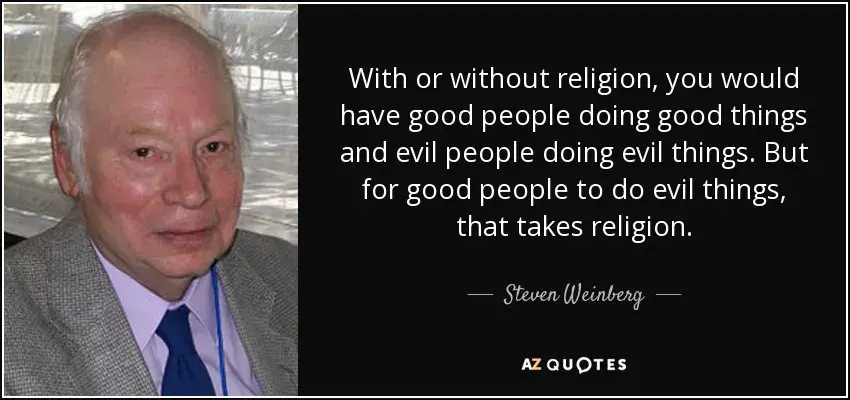
I understand that religions have contributed some of the most awe inspiring and beautiful creations in human history - architecture, art, and music. Also, much of the money that was spent to commission those things came from the tithes of poor working people. You could say freely given, I could say coerced, and we’d both be right.

I understand the human need to be part of a community, and the benefits of having shared values and a shared vocabulary. Religion has also been a major force in deepening divides by pitting “us” against “them”, whoever “they” might be in any particular location or moment in history.

I understand using myth and parable as guideposts on one's personal journey toward gratitude, service, and peace. Brain studies have even confirmed the neurological benefits of regular meditation or prayer.
What I can’t comprehend is believing that these fables are the literal truth. I’d be willing to concede that Jesus was very possibly a real person, but the Bible (as if it were one single monolithic thing and there aren’t actually 450 different versions of it in English alone) was written by dozens of men over the course of hundreds of years based on oral history.
This one document, one community’s specific interpretation and translation of it, written by people many lifetimes after the events in it took place is the true accounting of things or the actual word of god? Please.
If I had to put a label on what I believe, I guess the closest thing would be agnostic atheism. I acknowledge that there are active forces in the world beyond our current ability to perceive or comprehend. I don’t have any answers, but I’m certain that anyone who says they do is wrong, and they're probably trying to sell you something.

I appreciate people wanting to explore the big questions of the universe. I’m just not the kind of person who spends a lot of time ruminating on questions for which there are no answers - it all feels like existential masturbation to me. I find the explanation for our existence of gradual mutation and adaptation over the course of millions of years much more plausible than divine creation.
I feel pretty sure that when you die, that’s it. Your consciousness - as least as we can know it - ceases to exist. That idea scares some people - like looking out at the ocean or the stars and pondering just how small and insignificant we truly are. I find comfort in it. I'm reminded that whatever crisis is currently throwing a tantrum in my head on that particular day is, in the grand view, absolutely meaningless.

Everyone is free to have whatever opinions they want and I won’t begrudge them. But the Freedom of Religion is also the Freedom from Religion. Someone else’s beliefs shouldn’t affect what we teach everyone's children in public schools. They shouldn't inhibit my right to make choices for my own life, and they shouldn’t inhibit a woman's right to make choices for her own life and body. It feels like that very simple ideal has been under attack for a long time and is slipping away in America.
Having the second term of Trump’s presidency, the rise in power of Christian Nationalism, the dogmatic myth of American exceptionalism, and the rapid dismantling of our standing on the global stage as a backdrop for this trip has been…interesting.

I’m deeply concerned to see how far Christian fundamentalism has worked its way into our state and federal legislatures. I worry about the zealous and very influential minority who believe that our, and Israel's, war with Iran is a necessary step on the path to Christ’s second coming. Powerful people are actively working to bring about the end times - no hyperbole.

All of that being said, I haven't encountered anything like that in my interactions with strangers around the country. Nearly everyone I have met on my travels in every state has treated me with generosity and kindness, regardless of their worldview. Almost no one I’ve spoken with has brought religion into the conversation unprompted. I’d get a “God bless you” here and there, but I didn’t find people anywhere behaving like missionaries in their day-to-day lives.
My experience in Missouri was different from everywhere else. I didn’t realize when I chose Branson as my destination that the city and the surrounding area developed around Christianity. The pervasiveness of religiosity in Branson made my time there uncomfortable, even if I never felt directly proselytized.

As Missouri is the next state I’m going to write about, I felt like putting this out here for context. Although I’ve lately been incorporating more of my emotional states into my physical state posts, I didn’t want to weigh the Missouri post down with this more serious and potentially divisive diatribe. Anyway, thanks for coming to my TED talk. Next up - Missouri.
Yes, and…
Matt


Comments