Physical State of Matt #37: VERMONT
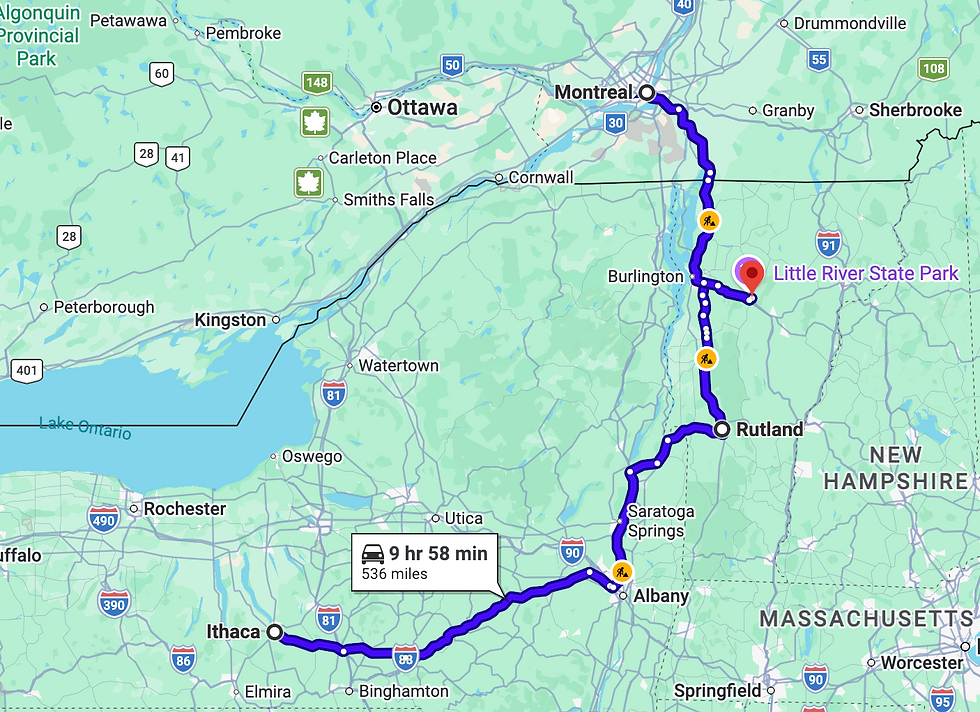
After a pitstop in Ithaca, I started northeast on my three-state run to close out New England. First up was Vermont. I had been to Vermont a handful of times before, but only for work retreats.
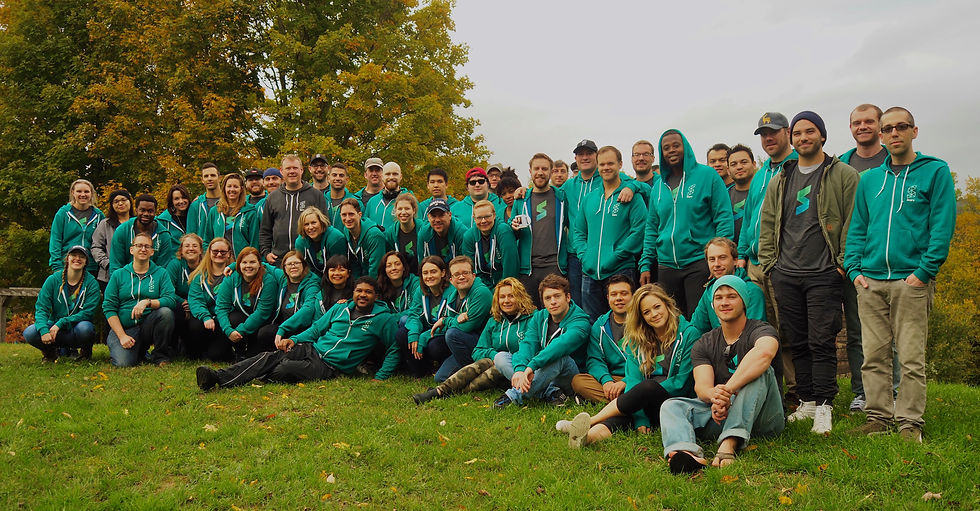
I worked for six and a half years for a Boston-based software company. Once a year we would get the company together in Vermont for a week-long retreat. I'd fly into Burlington, grab dinner with the team, then we'd drive about an hour into the country.
We’d stay at a place with a summer camp setup - cabins, fire pits, gathering halls, hiking trails, fields and woods. We participated in “bonding activities” and strategy planning sessions for the year ahead. Normally, this is the type of forced corporate bullshit that makes me gag, but the company was so small and tight we usually had a good time.
Burlington was the only place I could think of in Vermont, but it seemed like the obvious choice. I considered Montpelier, the state capitol, but decided against it when I learned that it only has 8,000 people. In fact, Montpelier is the state capitol with the lowest population. Next is Pierre, South Dakota with 14,000. The top three most populous cities in Vermont are Burlington, South Burlington, and Colchester (a Burlington suburb), so I picked the fourth - Rutland.
RUTLAND
Rutland was strangely deserted. The quaint downtown streets had few people walking them save for a scattering of meth heads. My Airbnb had a specific rule forbidding snowy ski boots on the hardwood floors, and Vermont is one of the top states for “leaf-peeping”. Perhaps, I reasoned, summer isn’t actually peak tourism season in Vermont. But, although fall and winter do bring their share of visitors, June and August are in fact the peak months.

The real answer of why Rutland felt so deserted may lie in the makeup of homes. New England has the highest percentage of vacation homes in the entire country. Maine is #1 nationally with 19.3%, Vermont is #2 with 17.45%, and New Hampshire is #3 with 11.79%.
Presumably, when wealthy New Yorkers and Bostonians want to “get away from it all”, many of them opt for a second home within driving distance. It has the unfortunate effect of jacking up home prices across the state. Despite being the second least populous state, Vermont has the 24th highest home prices.
My Airbnb had one of the strangest features I’ve ever seen. It was a large house with multiple units and on the second floor landing, looking out the front window, was a large statue of a pharaoh. No explanation.

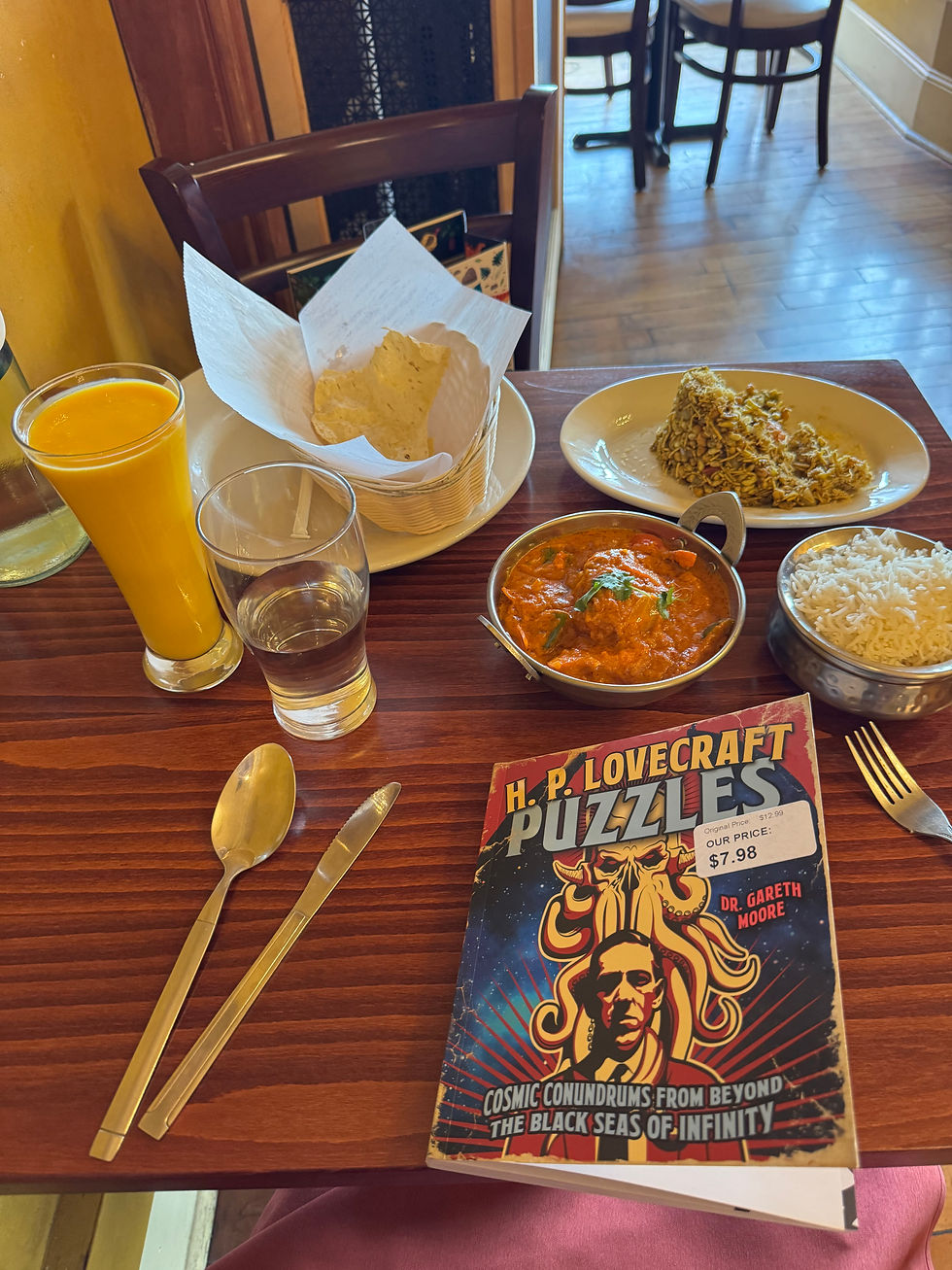
After checking in, I wandered the deserted streets. I stopped into Phoenix Books, an exceptional local and independently owned bookstore. I am always heartened when I see one because these stores are having such a hard time keeping their doors open. I got a couple of things to support them including a puzzle book with an H.P. Lovecraft theme.
I then ate an excellent early dinner at the Masala Corner Indian Restaurant while doing gothic horror brain teasers. For dessert I got a huge soft serve cone with maple syrup ice cream (yum!) and ate it on the balcony of my Airbnb. What a wonderful summer evening.
The following day, after a massive breakfast at Johnny Boys Pancake House (man, I love a good diner), I ran a few errands around town.

At the UPS Store, I was helped by a young woman named Ripley. I made a reference to Sigourney Weaver’s iconic character in the Alien franchise, and she told me that was who she was named after. I showed her my Weyland-Yutani tattoo and we shared a GEEKY moment.

After my errands I drove a short distance to hike the Deer Leap Loop in nearby Killington. No sooner had I started up the rugged dirt path than it started raining. It wasn’t pouring, but raining hard enough to make scrambling over roots and rocks kinda dicey. I turned back.
On the short drive back to Rutland I impulsively followed signs for a corn maze. I’d been to a corn maze only once before on Sauvie Island near Portland. It had been peak season in mid-October then so the maze was packed with people. The corn stalks were dry and rattled when the wind blew. As I wrote about in IOWA, walking through fields of corn taller than me takes me back to my childhood growing up in the country. I’m basically still a big kid, so I was excited to do this.
What I found at the end of the signs was the Hathaway Farm and Corn Maze. Their barn, known for the “1881” in shingles on its roof, and the farmhouse next door are in the National Historic Registry.
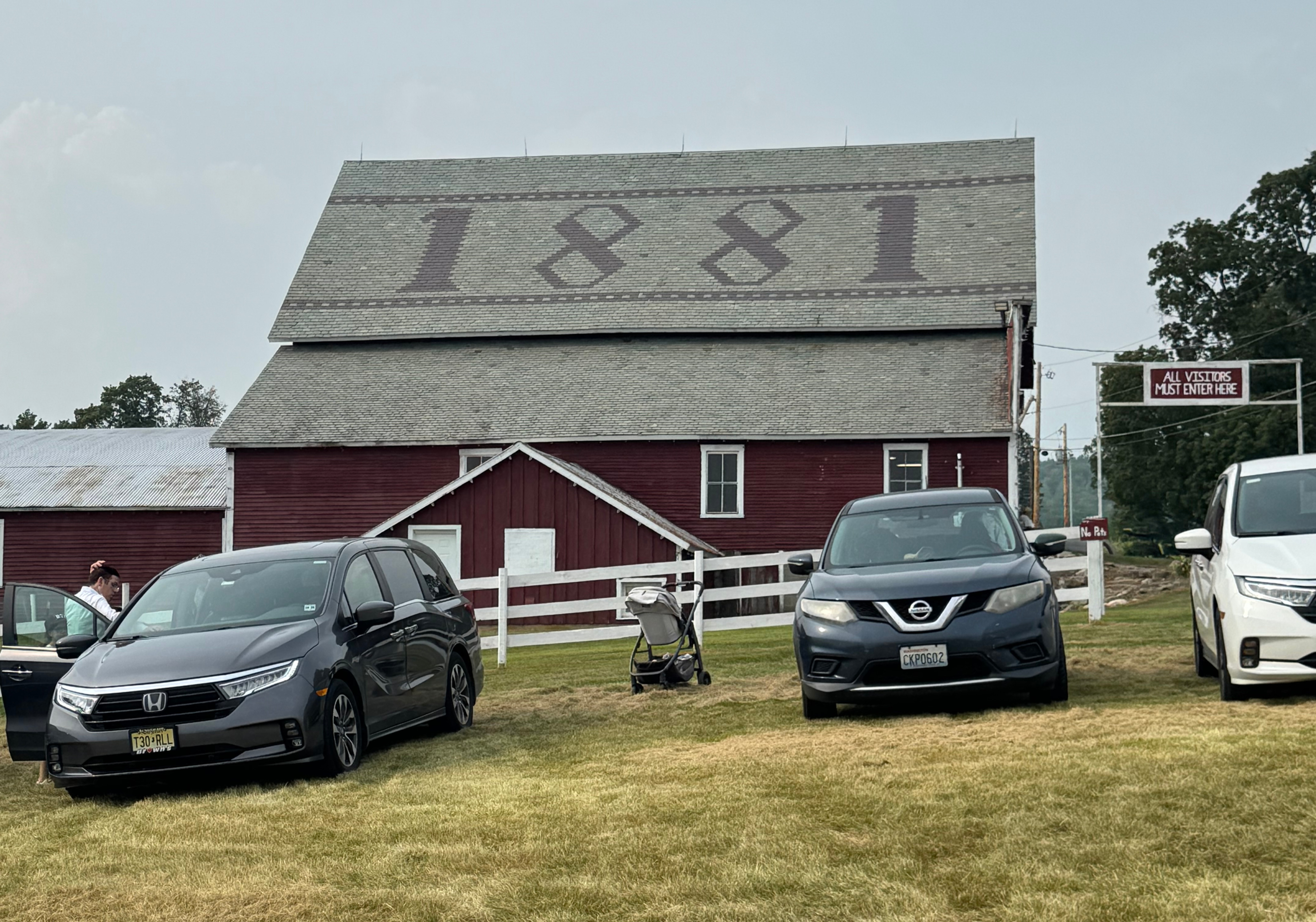
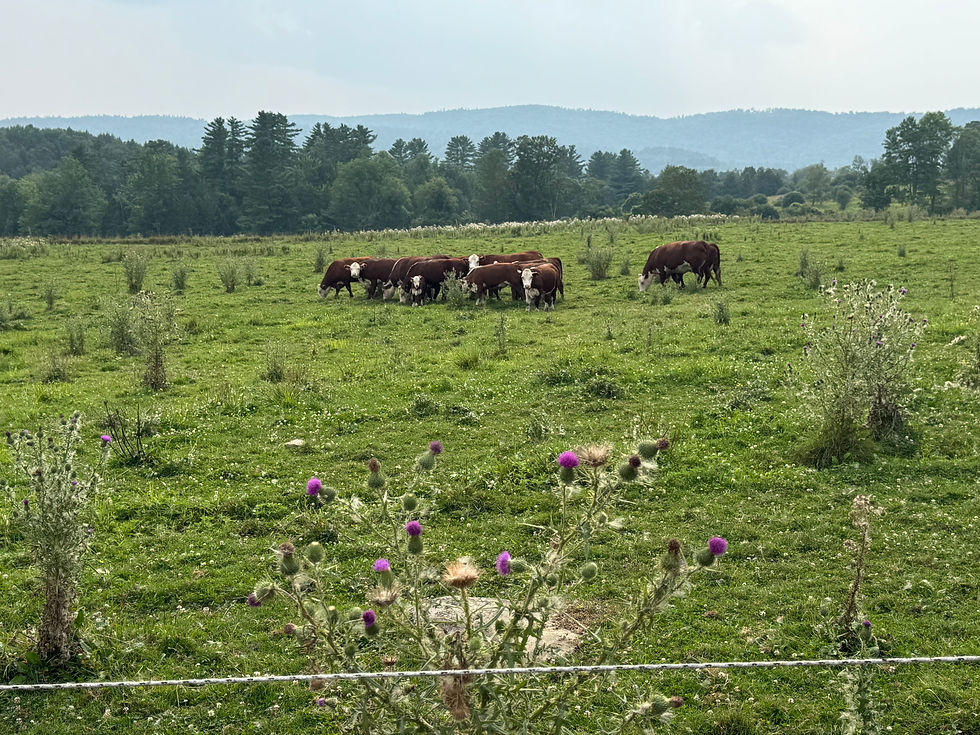
It was early August, so the corn was still lush and green, but already towered over me. Apart from a herd of cows grazing, there were only two other families there, so I had the maze nearly to myself. In fact I never saw another person while wandering through it.
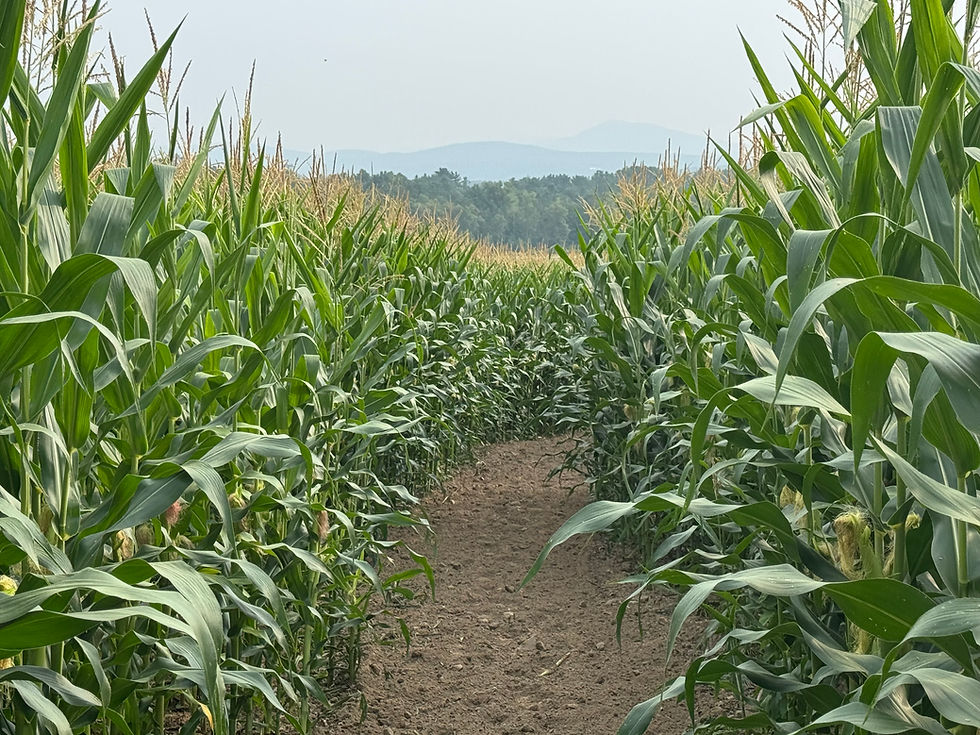
I very quickly got lost. I was able to keep a general sense of direction, but the paths twisted and turned so regularly I couldn’t reliably get back to any one point. I enjoy this. As a kid I would try to get myself lost in the woods, and later when I got my license I would take random turns and try to get lost on country roads. But I was always able to find my way back.

At the center of the maze was a wooden platform that allowed me to see the field around me. The maze covered an impressively large area. At 13 acres, it’s Vermont’s largest.

Apparently the rain had missed the farm because the soil that made up the paths was powdery and I sank an inch or two into it with every step I took. My shoes filled with dirt almost immediately. It was like the extra effort of walking through sand, but even more so. And the field was on a slight hill, so I got quite a workout.
BAIRD FARM
I awoke the next day with sore calves. I grabbed an early lunch at The Sandwich Shoppe, a memorable stop. The Zullo family have owned and run it for 40 years. The two generations of the family working that day, Christine, Terry, and David, were incredibly friendly and welcoming. We had a wonderful chat while they made my reuben sub, which was off the charts yummy.

I had booked myself a noon tour of a maple syrup farm - Baird Farm. The hills around their barn were blanketed with multicolored wildflowers and fluffy clouds drifted on the summer breeze - it was wonderfully picturesque. The only others there for the tour were a family of four. Jacob Baird, our tour guide, met us outside right on time.
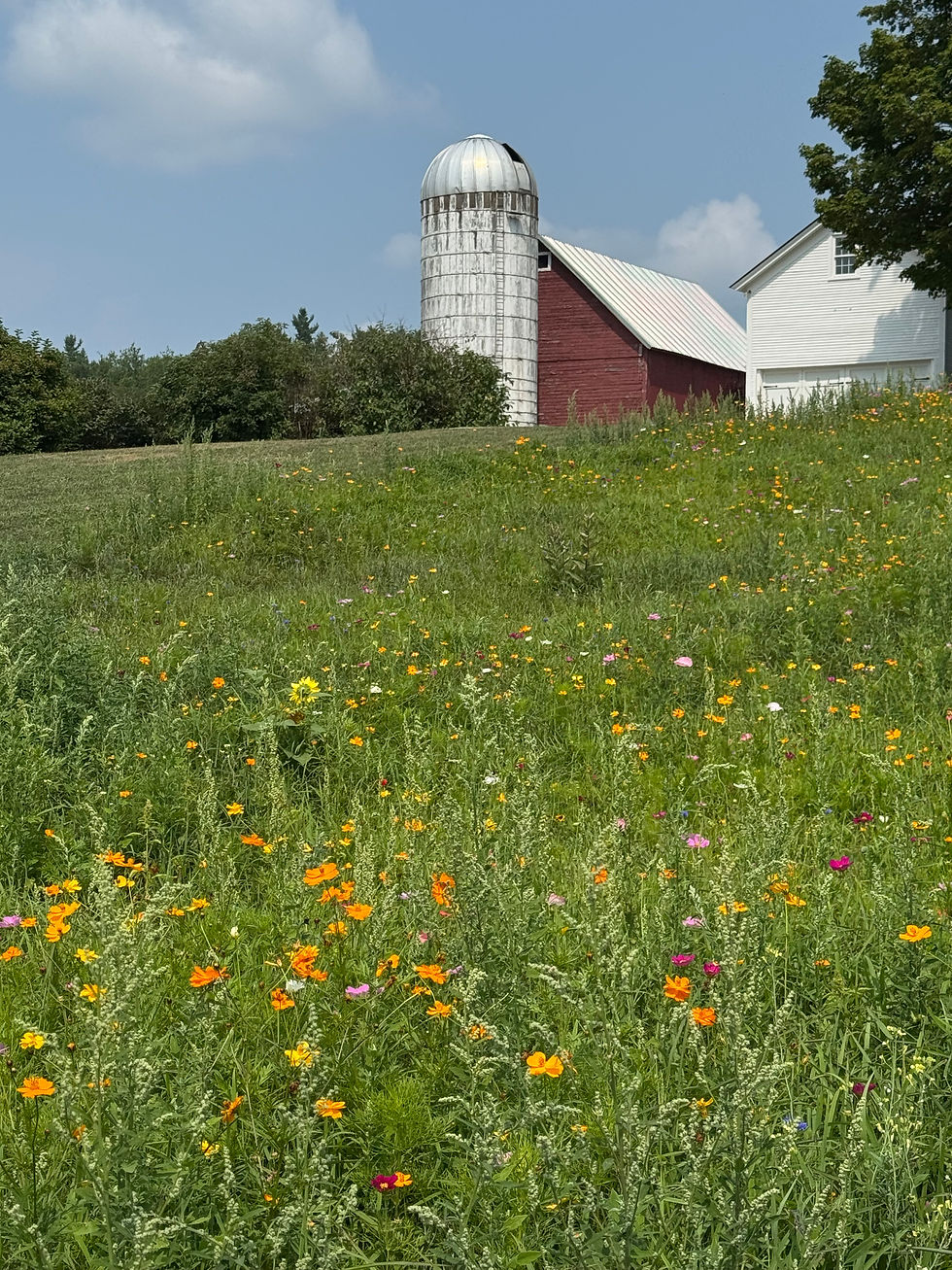
He walked us through a field to the trees while he told us about the history of the farm. The Baird Farm has been in operation since 1918, and has been run by four generations of the family. Within fifteen minutes the kids, maybe 8-10, got bored and whiny, so I quickly ended up with a personal tour of their operation.

It’s a rite of passage growing up in the northeast to learn about how maple syrup is made, and I had gotten my education at the Cayuga Nature Center. We tapped maple trees with little spigot-looking things (called spiles) and hung buckets underneath them to collect the sap. Once we had enough we put the maple sap (or maple water) into a large pot and boiled it over an open fire until we had evaporated enough water to make maple syrup. 40 gallons of sap makes roughly one gallon of syrup.

As you might imagine, modern industrial syrup operations look a lot different. Only two types of maple produce the kind of sap needed for syrup - sugar maples and red maples. Baird Farm has 14,000 such trees on 560 acres. The taps on their trees are connected with nearly 100 miles of plastic tubing. They make a new tap on each tree in January in preparation for “sugaring season”.

During the summer the trees produce sugar through photosynthesis and it’s stored in the roots. In late winter & early spring when the nights are cold and the days are warm the expansion and contraction of the trees push this sap up from of the roots and out the taps. Sugaring season stretches from around late February to mid-April. This is when farms gather all the sap for the year. Each tree generates about 25 gallons of sap per season.

The time of the season in which sap is gathered is one of the factors that determines the color and flavor intensity of the resulting syrup. The four grades are Golden, Amber, Dark, and Very Dark. Bacteria and yeast in the sap break down the sucrose into glucose and fructose (invert sugars). The warmer the weather gets, and the longer sap is stored, the more this happens. It takes longer to boil sap to syrup density the more invert sugars it has, which leads to the darker color.

The tree tubing pipes all of the sap into large storage tanks. The sap is then put through the reverse osmosis process where it is forced under high pressure through filters that remove most of the water content. The resulting concentrated sap is then boiled down to the desired consistency and bottled (or canned). Jacob and his wife Jenna showed us their equipment for the full end-to-end process.

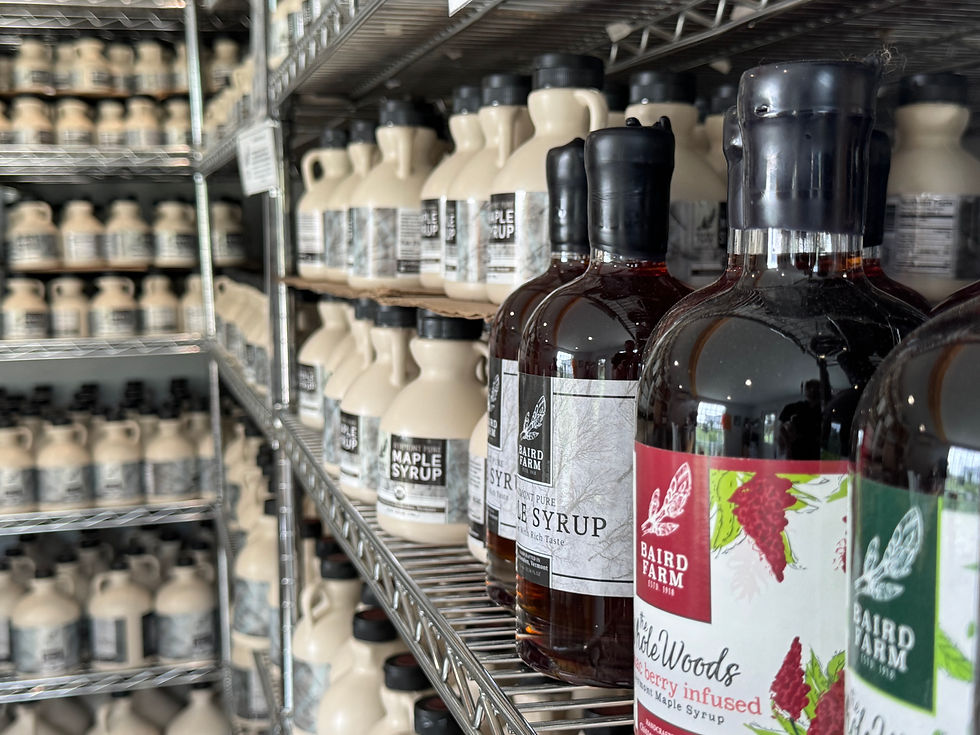
In addition to the normal four grades of syrup, Baird Farm also makes four flavors of infused syrup - sumac berry, birch bark, mint, and spruce tip. In total, Baird Farm produces around 6,000 gallons per year and is, by Jacob’s admission, a small farm. Maple syrup is big business for the region.
To illustrate what a big business it is, Jacob shared a story that sounded too ridiculous to be true - but it is: The Great Canadian Maple Syrup Heist. In Quebec, syrup production is heavily regulated. The Federation of Quebec Maple Syrup Producers determine how much syrup can be produced in a given season and they give farmers quotas. To control price, they keep a strategic reserve of syrup - you know, like the US does with oil.

From 2011 to 2012, thieves tapped into the strategic reserve, stealing around 3,000 tons of syrup (by my math, that's roughly 1.35 million gallons) and replacing it with water. This syrup, valued at $18 Million Canadian, was then sold on the black market. The heist inspired the Amazon limited series “The Sticky”, which featured Jamie Lee Curtis in two episodes.
To close out the tour I tasted a bunch of different syrups, but uncharacteristically stopped before I got a tummy ache. I ended up bringing home three bottles of their flavored syrups, which are just incredible.

BEN & JERRY’S
I popped up to Montreal for the weekend - man, I really love that city. It’s the closest thing to a European city you’ll find in North America. The food and culture is wonderful and I get a chance to break out what little French somehow stuck in my head from high school.

Vermont is best known for several things: it’s fall foliage, maple syrup, its progressive politics (Bernie Sanders, first to abolish slavery in its state constitution, first state to legalize gay marriage through the the legislature), covered bridges, and its dairy industry - in particular Vermont cheddar and Ben & Jerry’s.

The ice cream company was formed in Burlington by childhood friends Ben Cohen and Jerry Greenfield. Ben had been struggling to sell his pottery and Jerry had been rejected by medical schools, so they agreed to open a store together. The Long Island natives originally wanted to open a bagel shop, but found that the machinery to make bagels was too expensive. They spent $5 to take an ice cream making course at Penn State, and scraped together $8,000 to open the first Ben & Jerry’s in a converted gas station in 1978.
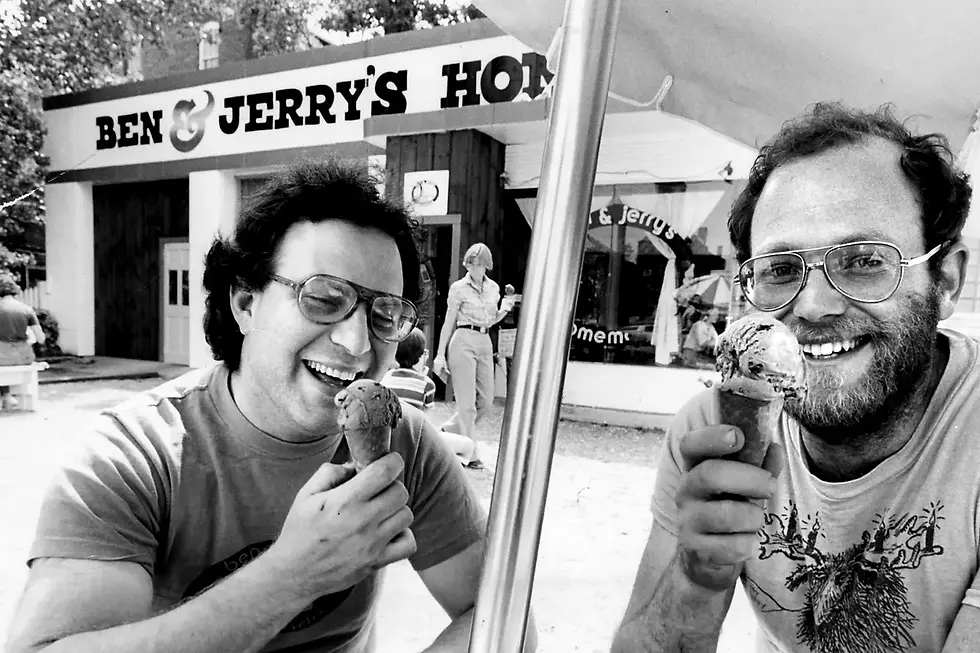
The first year they also sold other foods like soup and crepes, but the ice cream was a hit and they dropped the other foods the following year. They found themselves on the early cusp of the superpremium ice cream movement in the US. Superpremium ice cream has better ingredients, higher butterfat content and is denser because less air is whipped into it.
Their main direct competitor in the early days was Häagen-Dazs. I was shocked to learn that the company is not actually European. Häagen-Dazs was formed in The Bronx in 1960 and the faux-Scandanavian name was invented to create the perception of European luxury.

Within ten years the company was worth $30 Million, then $150 Million when Ben stepped down as CEO in 1994. In 2000 the corporate behemoth Unilever bought Ben & Jerry’s for $326 Million. Today, estimates put their annual global sales somewhere in the range of $1 Billion - more than half of what total US ice cream sales were in the year they formed. They are the top selling ice cream brand in the US.

Between their factory in Waterbury (the one that offers tours), and the one in St. Albans, they produce a million pints of ice cream per day using local Vermont milk. For international markets they operate a smaller factory in the Netherlands.
Unfortunately they don’t allow photos to be taken inside the factory, but the operation was incredibly impressive. The group was taken on a 30-minute tour through all of their production steps including pasteurization, flavoring, “chunking”, packing, and freezing.
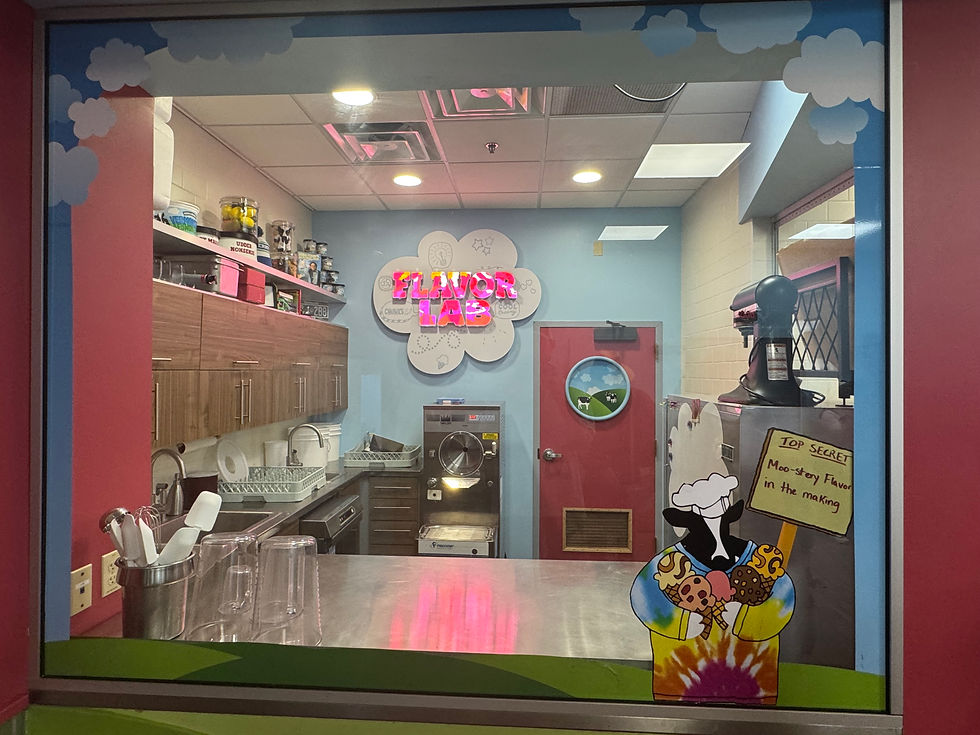
Gargantuan, gleaming stainless steel equipment pushed out completed pints at a staggering pace. To avoid cross-contamination they produce only one flavor at a time and while I was there they were making Milk & Cookies. As I had been hoping, the tour ended in the Tasting Room where we got to sample different flavors. Their top seller is Half Baked, their cookie dough option.

Ben & Jerry’s scoop shop in Ithaca opened in 1983. It was only the fourth shop they opened and the first one in New York State. The city’s progressive, hippie vibe aligned well with the company’s ethos. I remember going there as a kid for the occasional decadent treat. As a teenager I had several friends who worked there at one time or another. The store had a “come-as-you-are” attitude to hiring, so it was one of the few places my pierced and tattooed friends could find customer-facing work. It has sadly closed since.

Progressive ideals and social activism have been a core part of Ben & Jerry’s DNA since the beginning. Over the years they have produced many flavors to support specific causes such as Yes Pecan! (Common Cause Education Fund), Save our Swirled (climate action), and Empower Mint (NAACP). From time to time they also create flavors in partnership with celebrities such as Stephen Colbert’s Americone Dream (supporting disadvantaged youth & veterans).

I asked the tour guide some tough questions about the company’s brand image and activism post-Unilever acquisition. There was a special clause in the acquisition agreement that established an independent board which would, among other things, guide the company’s political mission.
However, in my experience, when giant corporations are involved, outspoken activism is discouraged because it can ideologically alienate some customers. The guide gave answers that seemed to say all the right things, but felt to me like safe, workshopped corporate bullshit.
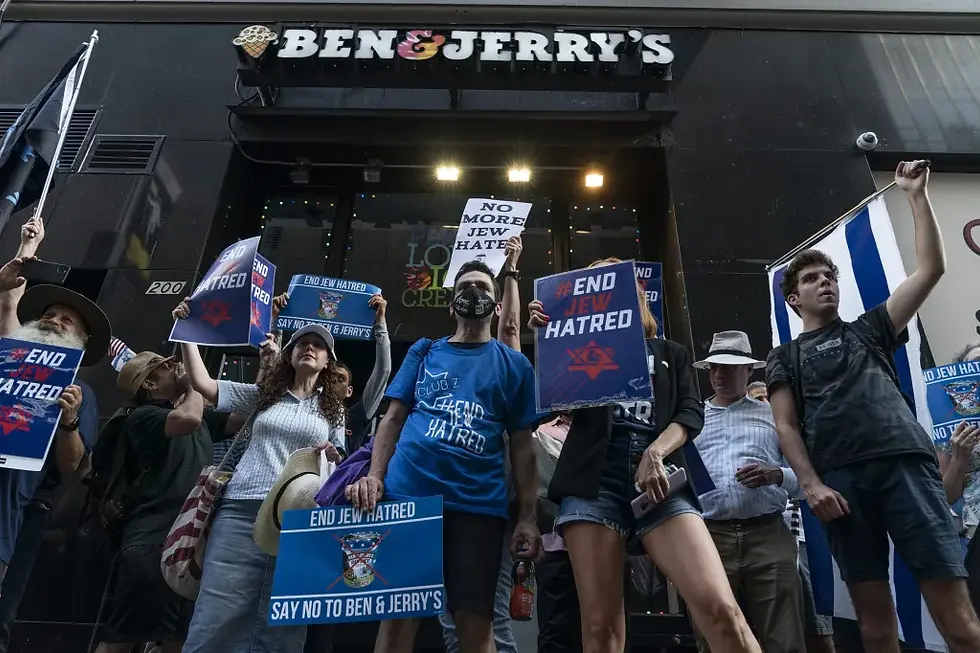
And then, sure enough, earlier this year there was a conflict between Unilever and the founders. The company came down on their desire to create a flavor calling for a ceasefire between Israel & Palestine and forbade them for making a statement celebrating Black History Month.
Jerry walked, but Ben fought back. This conflict has played out in the public forum, and to date is unresolved. Unilever spun off its ice cream business into The Magnum Ice Cream Company in December 2025. Ben has tried to get Magnum to sell Ben & Jerry’s to a collection of progressive investors, but Magnum has so far refused.
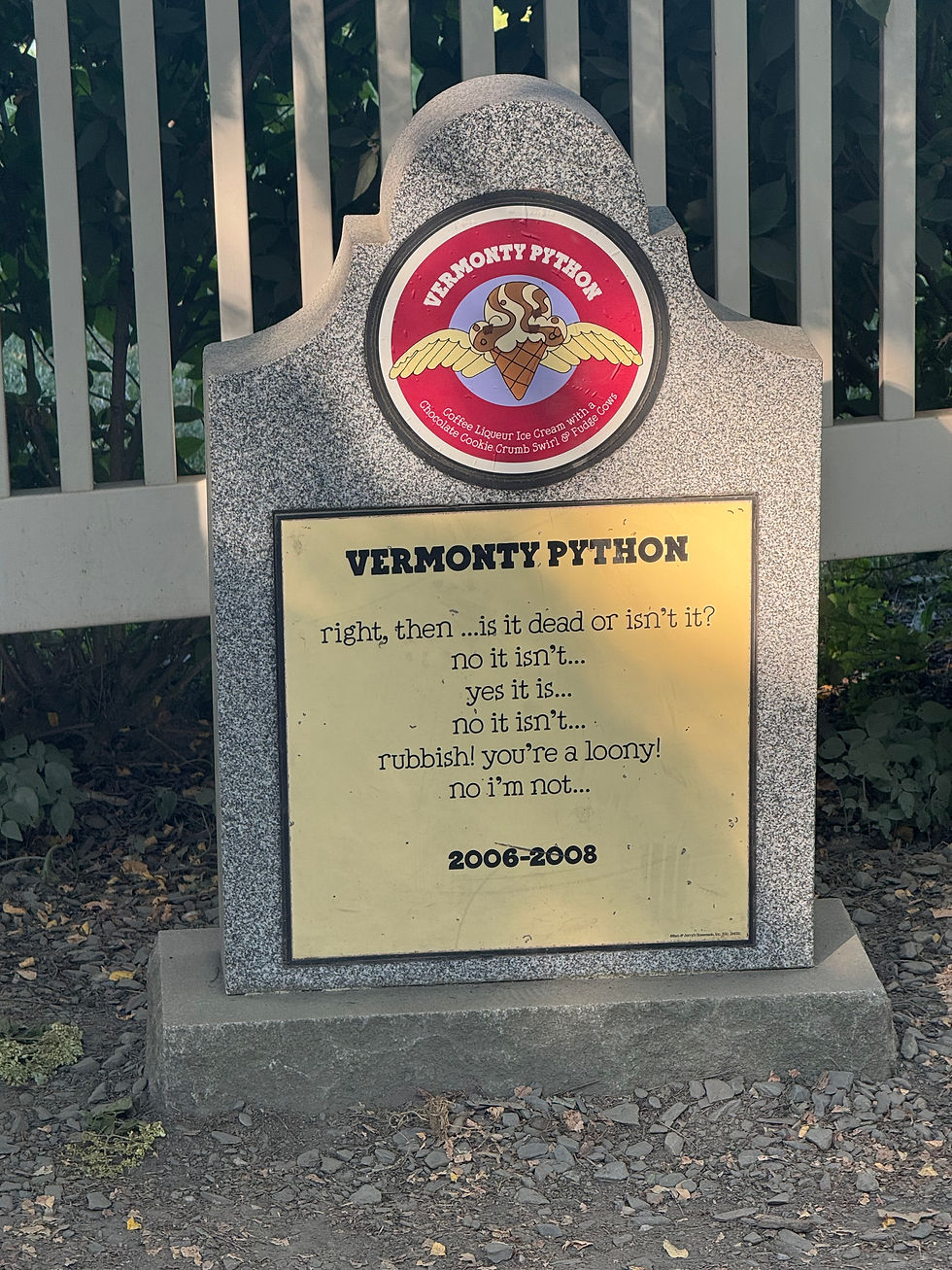
After the tour I got a scoop of my favorite flavor Coffee Toffee Bar Crunch (formerly Coffee Heath Bar Crunch but they stopped using Heath Bars) at their on-site shop and visited their famous Flavor Graveyard. Ben & Jerry’s puts out several new flavors each year and not all of them are hits. When they retire an unsuccessful flavor they often erect a gravestone for it with a silly epitaph.

The graveyard currently commemorates 35 flops like Sugar Plum, Aloha Macadamia, Rainforest Crunch (I remember that one), and Vermonty Python. I found myself wishing that I had known about some of these flavors so that I could have tried them. But I don’t eat ice cream all that often, so I guess I missed out.
With a belly full of butterfat and sugar, I pulled Pierogi out of the Ben & Jerry’s parking lot and into the sunny summer afternoon. I was headed south to the smallest state of them all - Rhode Island.
Yes, and…
Matt


Comments