Physical State of Matt #35: MISSOURI
I had a religious experience in Missouri, but not in the way that phrase is usually used.

I’d been driving since Chicago so I stopped in St. Louis for the evening, just over the border from Illinois. Just outside my hotel was the St. Louis Wheel - one of those giant ferris wheels like the London Eye or the High Roller in Las Vegas. I’d never been up on one of those, so I figured why not?
Dusk was settling into night by the time I boarded the wheel, which flashed colorful designs. Each of the cars was an enclosed plastic bubble. Unlike my time at Cedar Point in OHIO, I was able to ride solo. A faint drizzle spattered the car as I ascended. As the wheel began to spin, I was carried up over the arched roof of Union Station, which allowed me incredible views over Busch Stadium and beyond to the St. Louis skyline and the iconic Gateway Arch.

Heights have never really bothered me, especially in something as gentle as a ferris wheel. As I’ve gotten older though, I do get the occasional stab of vertigo, so just in case I try to stay a short distance from the edge of any steep dropoff.
While I was at the very top of the wheel it stopped for a short time to let passengers in at the bottom. The car began to swing back and forth - like it was designed to do - and I got a sudden pang of panic and started imagining the car sliding off its mooring and tumbling 200 feet down to the concrete below. I took several deep breaths and calmed myself down from the fight or flight adrenaline jolt - that had never happened before.

The St. Louis Wheel is a permanent installation and I’m sure it was constructed solidly with the utmost safety in mind, but I always thought it was odd that so many people go on rides at traveling carnivals. We’re a nation of people that require nanny-state safety protocols, but we’ll happily ride the Gravitron at the county fair because we trust that Bob the Carny put it together good.

My feet safely back on the ground, I walked around Union Station, which was right next to the wheel. Once a booming travel hub, the station found itself in decline as rail travel dried up in the 1960’s and 70’s. The building was expensive to maintain, so in 1978 the city moved the train service elsewhere and converted it into an entertainment and retail complex.
Various shops and restaurants ringed a massive concrete pool stocked with koi, who swarmed over to me as I approached, hoping for a morsel. Most of the shops were already closed on this Monday night and the station was deserted but for a lone sports bar. Still, it was a pretty impressive looking structure.

The next morning I checked out and drove downtown. I had booked a noon ticket to visit the Gateway Arch. I had a couple of hours to kill so I explored. I expected to find downtown bustling on a work day, but it was rather deserted. The signs of lingering urban decay abounded - vacant buildings, graffiti - it was pretty rundown.

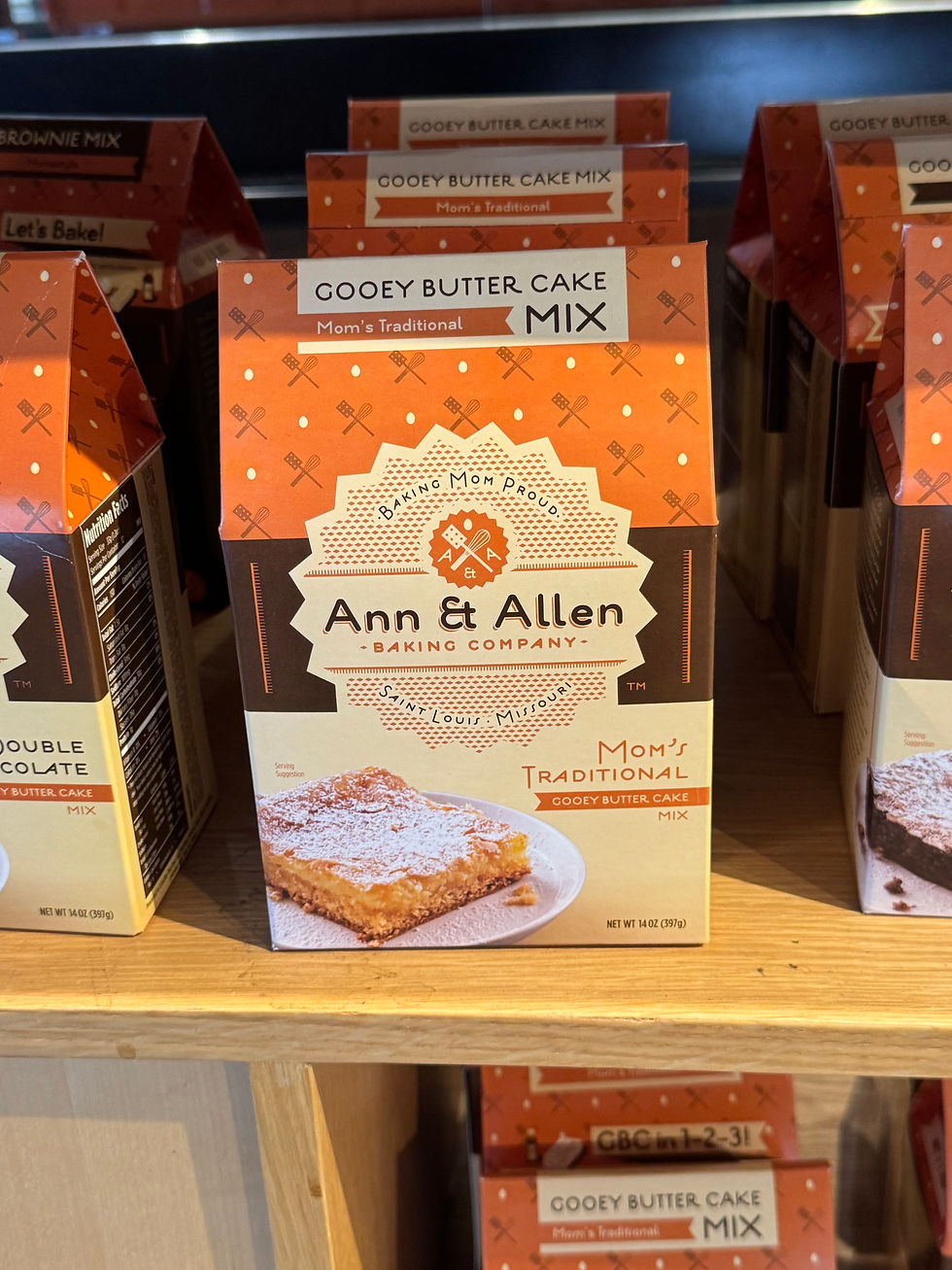
I stopped into a cafe and discovered the St. Louis classic Gooey Butter Cake. Its origin is a funny tale. During the Depression John Hoffman, a St. Louis baker, was making a batch of coffee cake. He must not have had his coffee (or perhaps he was dyslexic) because he transposed the amounts of butter and flour. The result was a gooey, greasy mess. Given the scarcity of basic goods at the time, necessity dictated that he sell it. Customers bought it up and loved it, so he started making it as part of the regular rotation. It was gooey (duh), sweet, and delicious but after a whole square of it I felt a little sick. It's a lot of butter.
The Gateway Arch is an impressive structure that dominates the St. Louis skyline. Its imposing massiveness doesn’t register however until you see it in person. The arch looms 63 stories high and it seems incomprehensible that it stays standing. It’s the largest arch in the world and the tallest man-made monument in the Western Hemisphere. Although it's only ⅔ as tall as the Eiffel Tower, it’s 100 feet taller than the Washington Monument and twice as tall as the Statue of Liberty.
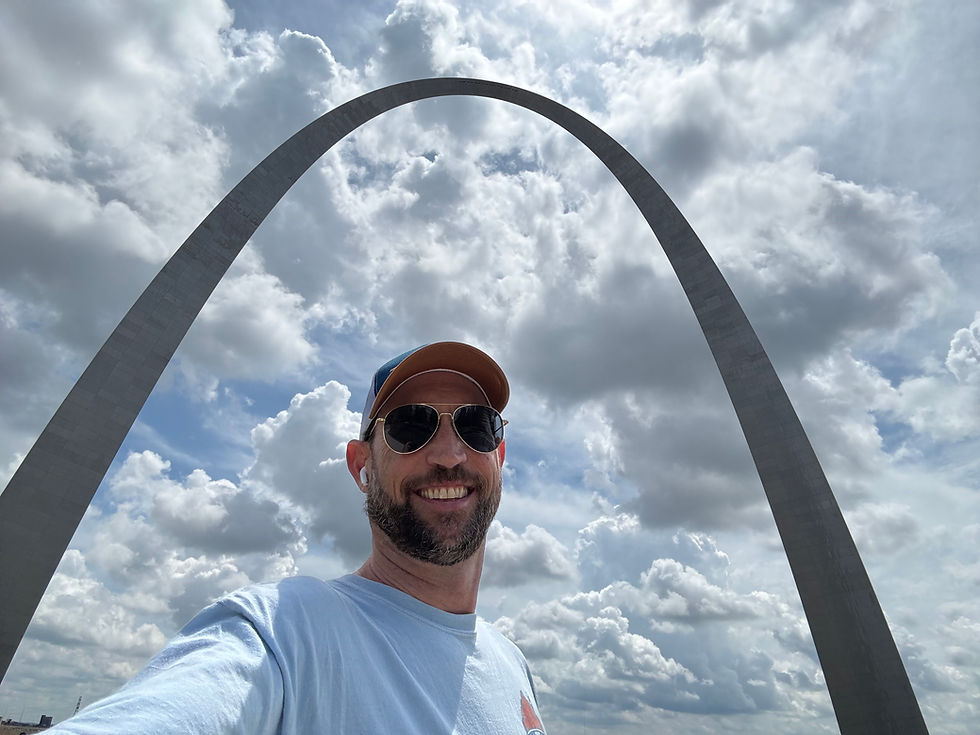
The arch is exactly as wide at its base as it is tall, though it doesn’t look like it in pictures. At 92 acres, Gateway Arch National Park is the smallest of the 63 US National Parks. It’s less than 2% the size of the next smallest, Hot Springs National Park in Arkansas. The National Park Service actually lobbied to designate the arch a National Monument since it’s entirely manmade, but Congress named it a National Park, in part to increase tourism.

Started in February 1965, construction took 2 years and 8 months, but it wasn’t opened to the public until over a year after it was finished. The architect, a Finnish-American named Eero Saarinen, designed many several lasting buildings over his career including terminals at Dulles and JFK Airport, but the Gateway Arch is by far the most recognizable. He passed away in 1961 from a brain tumor, two years before they broke ground on the project. The final budget for the project was $13 Million, or about $135 Million in today’s dollars.

Although there are 1,067 steps in each side of the arch leading to the top, they’re only for maintenance and not open to the public - not that I wanted to take them. The way that visitors get to the top is in cramped globe-like pods with five seats each. They have the aesthetic of 1960s science fiction - this was what “futuristic” looked like then. I could easily imagine them in 2001: A Space Odyssey, which started filming the year the arch was completed.

I arrived about 10 minutes early and was put into a queue. When our timeslot was next up, we were organized into groups of five and placed on numbered stairs. Since I was solo, I was paired up with a family of four. If you look up “All American Nuclear Family” you would get a picture of them. The husband was clean cut with a crisp dress-shirt. The wife had long straight hair and a demure dress. Their two tow-headed daughters were wearing identical blue floral dresses that matched their big blue eyes. They looked like carbon copies of each other, but for the two-year difference in their ages.
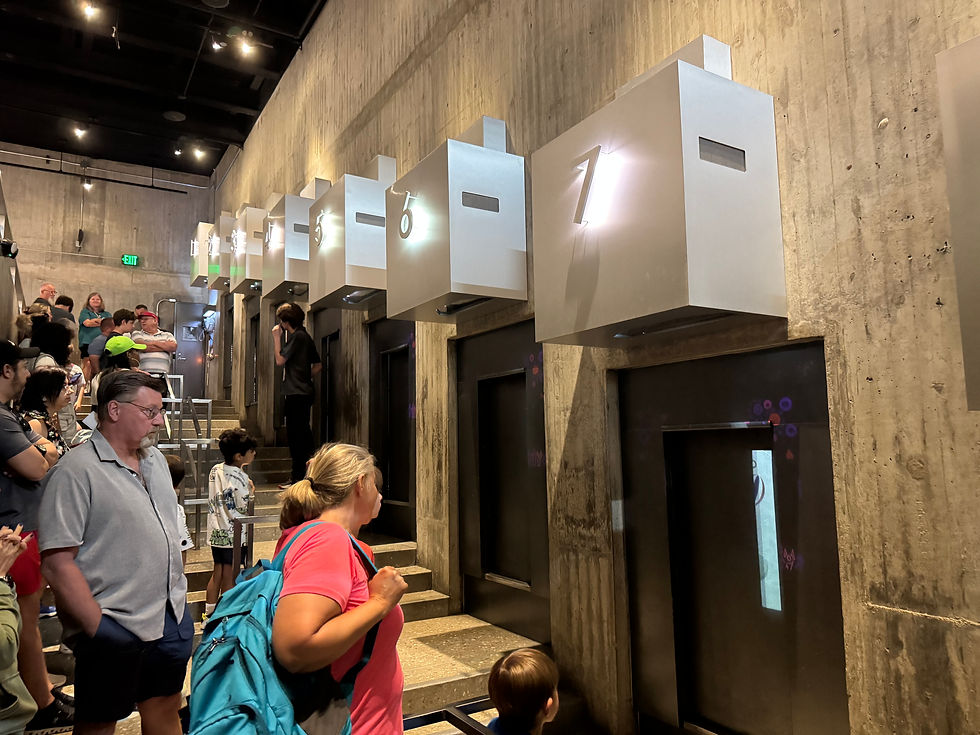
The husband was a pastor from somewhere-or-other and they were on an extended family roadtrip. They had been to many of the same places I had been in the previous weeks so we compared notes and shared travel stories as our pod moved diagonally up the leg of the arch. The pods are lifted by a mechanism that is more similar to a tram than it is to an elevator or escalator. Through the glass in the door we watched the machinery that carried us up.

We were delivered to the top of the arch and went our separate ways. The room at the top was simple and unadorned. The floor, as you might imagine, had a gentle curve to it. The precise timing of the tickets ensure that it wasn’t overcrowded. Along each side, small windows in padded alcoves offered sweeping views.

The Gateway Arch is the tallest structure in St. Louis. On one side the vast muddy Mississippi flowed left to right. On the other side the city of St. Louis stretched to the horizon.

From 630 feet the city looked like a richly detailed model. The Old Courthouse stood out front and center. Built in the 1830s, it served as a state and federal courthouse until 1930. Most famously it hosted the state-level hearings for the Dred Scott v Sandford case.

Although the state granted Dred Scott and his family freedom, this ruling was later overturned by the Missouri Supreme Court. The case eventually to the US Supreme Court, where in 1857 it ruled that the freedoms and rights of the US Constitution did not extend to blacks. It's widely considered the worst decision in the history of the Supreme Court.
The courthouse building is now part of Gateway Arch National Park and serves as a museum.

After ten minutes we piled back into our pods and rode back down to the bottom of the arch. The family and I said our goodbyes, then the dad asked a question that totally threw me. He said “we’ll pray for you and your trip. Is there anything specific you’d like us to pray for?”. His daughters’ piercing eyes looked up at me expectantly. I stammered out a flustered “no thank you”, and took my leave.
His offer had made me uncomfortable. It felt silly that should be the case, but it was. He was graciously extending a gesture of support and kindness in the language that he spoke. But his religion felt thrust upon me - like Jehovah’s Witnesses or Mormons knocking on your door uninvited. There was a presumptuousness in it that I didn’t like.

It’s assumed in some parts of the US that if you’re an American of course you must be Christian. The question asked is not “are you religious?” but “what church do you go to?”. Maybe it’s like this too with Hindus in India or Muslims in Turkey, but all I have for reference is being raised in the US - and it bugs me.
I couldn’t help but wonder what his reaction would have been if I’d told him that I planned on sacrificing a chicken for him and his family, and did he have a preference which breed of chicken I used?

I retrieved my car and steered Pierogi onto the entrance ramp for I-44 West, destination: Uranus.
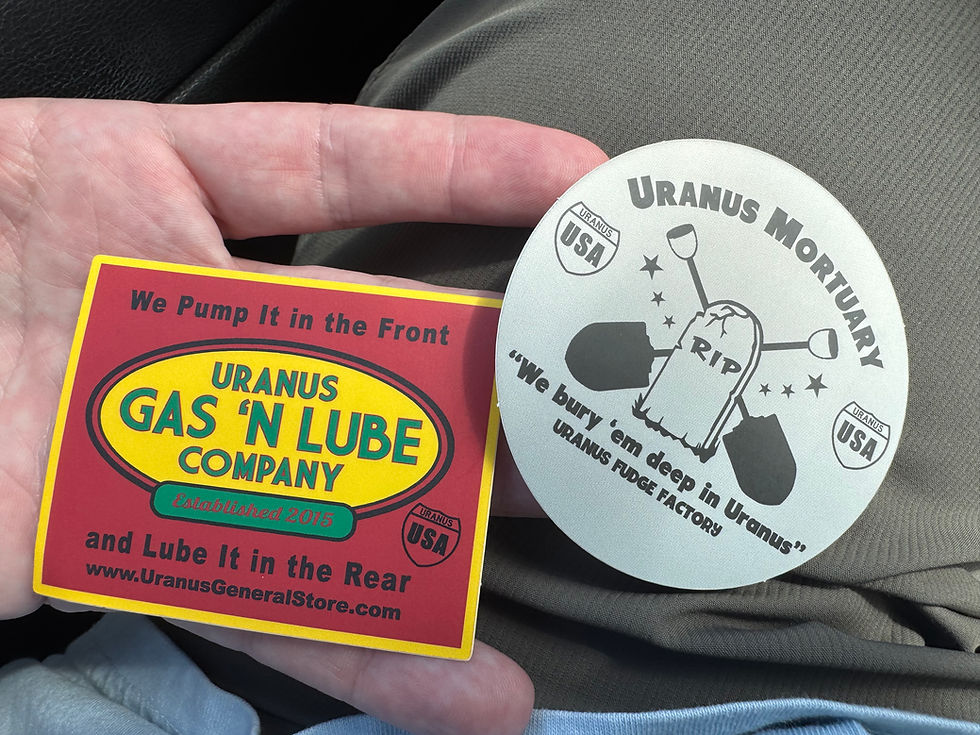
The Uranus Fudge Factory is a giant, living and breathing poop joke. Normally I am a fan of juvenile and scatological humor, but this place takes it way, way too far. Suffice it to say that no one there says “YEW-rah-nis”, they all very pointedly say “Your-ANUS” .

The roadside complex contains the Uranus Fudge Factory & General Store, the Escape Uranus escape room (ick), the Uranus Sideshow Museum, and several other attractions. After parking, I stopped on my way to the store to take pictures with my face in animals' buttholes...a sentence I never thought I'd type.
I entered the General Store to a chorus of “Welcome to Uranus” from every person working there. They did this every time anyone walked in the door. The store sold fudge (yes, they do actually make fudge), and everything you would expect in a tourist souvenir shop, but with a butt or fart or poop theme. Even the bathroom was adorned with poop-themed cartoons painted on the walls.
I spent about 20 minutes there, grabbed some mint-chocolate fudge, silly postcards, and stickers. After 20 minutes the jokes were no longer fun or silly, just tired. On my way out, the dead-eyed cashiers called out in unison “Thank you for visiting Uranus”. I can’t imagine how sick of it they must be.
I arrived at my Airbnb in the early evening. The summer sun was still shining and the air was soupy. The apartment was a bland condo - part of a collection of buildings that were clearly used primarily as vacation rentals. Screaming kids splashed in the large swimming pool outside while their parents tanned.

I had chosen Branson based on a suggestion from two of the new friends I’d made in Sandusky, Alex and Kayleigh, who had lived there for a spell. But, as is my practice, I’d done zero research. I’d heard that Branson was an entertainment destination for the area, but I didn’t realize until I arrived that it was a destination geared toward Bible Belt Christians.

Branson was formed in 1882. It grew in 1902 when the Missouri Pacific Railroad added a stop there. In 1907 the novel The Shepherd of the Hills by Harold Bell Wright was published, which became an overnight success. The book’s main character is Daniel Howitt who leaves big city life to become a shepherd in the fictional Mutton Hollow of the Ozark Mountain region of Southern Missouri and Northern Arkansas. Although not an overtly “Christian book” per se, it explores themes of forgiveness, redemption, and Christian faith.

The novel sold two million copies by 1918 which brought public attention, along with an unprecedented number of visitors, to the Ozarks. Branson boomed. The subsequent film adaptation in 1941 only compounded public interest.
In 1959, the first live music show in Branson opened - The Baldknobbers Jamboree. The act's name came from a local 1880s vigilante group called the Bald Knobbers who met on the grassy peaks of the nearby mountains (the bald knobs) and fought outlaws together. Their local legend gained greater notoriety when they were featured as villains in The Shepherd of the Hills. They wore masks that made them look like Mr. Bill robbing a bank. I have so many questions…
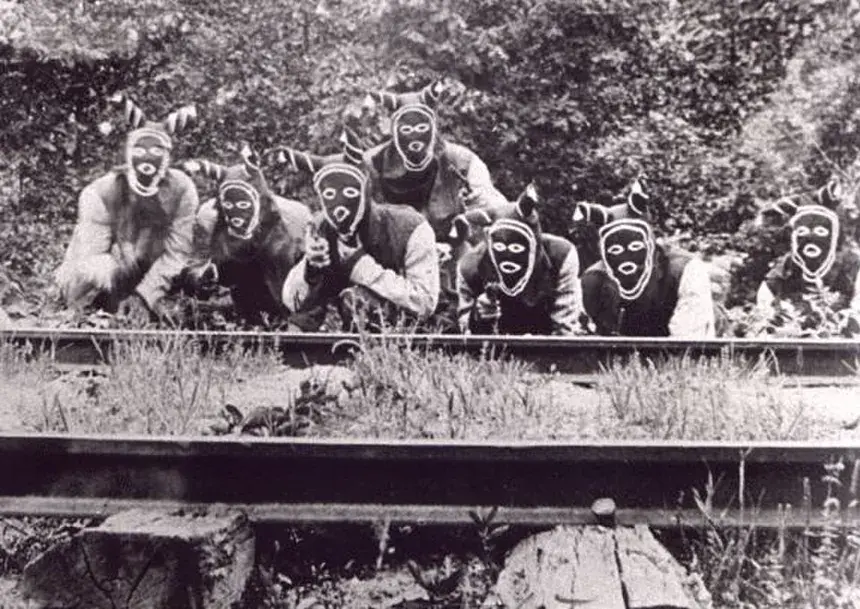
This country music and variety show originally played in a modest room with 50 folding chairs. 67 years later, the Hughes Brothers Theater still showcases The Baldknobbers Jamboree nightly, now in a space that seats 1,500. Branson’s reputation as an entertainment destination boomed in the 80s and 90s when “major stars” like Andy Williams, Glen Campbell, and Roy Clark chose it as the site for their permanent theaters and long-running live shows.
Not to be a dick, but I literally had to look up who each of three of these people were.
Andy Williams was a crooner and TV star best known for his rendition of “Moon River”, the main theme of Breakfast at Tiffany’s, for which Henry Mancini and Johnny Mercer won an Oscar in 1961. Andy Williams used Moon River as the theme for The Andy Williams Show, a TV variety show that ran from 1962 to 1971.
Glen Campbell was a country musician and actor best known for the songs Wichita Lineman and Rhinestone Cowboy. He received a Golden Globe nomination for appearing alongside John Wayne in True Grit, and hosted CBS’s The Glen Campbell Goodtime Hour variety show from 1969-1972.
Roy Clark was another country musician and actor. His biggest musical hit was “Yesterday, When I Was Young”, but he is probably best known for hosting his TV variety show Hee Haw, which ran from 1963-1993.
You may, perhaps, be noticing a theme.
In 1991, 60 Minutes did a segment on Branson titled “$ound of Music”, which at the time had only 3,000 residents but 22 theaters and hosted 4 million visitors per year. They dubbed it the “Live Music Capital of the Universe” and estimated that people spent $1.5 Billion per year in the small town of Branson.
Live shows are still the lifeblood of Branson, though you get the sense its boom days are in the rearview. The city likes to brag that it has more theaters and theater seats than Broadway. Although this is mathematically true, I would challenge you to find two places more different than Branson and Broadway.
The other cornerstone of Branson tourism is the Silver Dollar City theme park. It originally opened in 1960 as an 1880s themed village alongside the natural attraction the Marble Cave, which had been bringing in visitors for decades. They named it for their promotional idea to give silver dollars as change. The idea was that people would go back home after vacationing in the Ozarks and spend the silver dollars. When people asked where they got them, they’d tell the story of their visit to the Marble Cave Silver Dollar City.

Apparently it worked, because they added and added to the park. In 1969, they filmed a 5-episode arc of The Beverly Hillbillies there. Today the theme park has 12 stages, demonstrations from 100 craftspeople, and 40 rides and attractions.
Silver Dollar City is not a “Christian Theme Park” in the same way that Orlando’s Holy Land Experience was, or Kentucky’s Creation Museum is, but they have a log cabin church that holds two services every Sunday, they book Christian acts, and host field trips and retreats for Christian youth groups. Their mission statement is:
“The park’s broader vision is to bring families closer together, guided by values that include exceeding guest expectations, serving others through teamwork and accountability, creating emotional connections, and constantly improving while adhering to Christian values and ethics.”
I knew none of this before arriving in town.

I loaded my stuff into the condo I waited in the AC for a bit until the worst of the day’s July heat had cleared, then walked the ten minutes into town. Although it was no longer 95 degrees, it was still 3,000% humidity. I honestly felt like I could have breast-stroked my way downtown faster than walking.
I found the streets of downtown, situated on a hill that ran down toward the White River, ripped up for construction and all the shops closed. Restaurants, souvenir shops, everything had been closed since 5:00 at the latest. I made my way down to the river, sensing some activity there.

Running several blocks along the shore of the river was Branson Landing, in essence an outdoor shopping mall. It started on one end with Paula Deen’s Family Kitchen, an imposing 300-seat restaurant from the “Queen of Southern Cuisine”.

The mall continued for about five blocks with many of the familiar staples including a Bass Pro Shop, a few restaurants, and an arcade. Near the far end there a wide open square with landscaped steps down to the water, and a modern concrete and stainless steel fountain with a semi-circular footpath stretching out over the river's tranquil water.

I wandered for a while, taking in the underwhelming sights. Foot traffic seemed pretty light for a booming entertainment destination in peak season. “So this is Branson, huh?” I thought. The air was so heavy that a fine mist floated above the river. A zipline crossed over from the far side.

At 8:30 I decided it was time to get something to eat. With shock, I discovered that every bar and restaurant in downtown Branson closed by 9:00 with the exception of one - Big Whiskey’s American Restaurant & Bar. So that’s where I went. I would go back twice more during my time there - not because it was great (it wasn’t), I just didn’t have a lot of options.

The next day I looked at shows - when in Rome, right? The options were numerous, but nothing seemed particularly enticing:
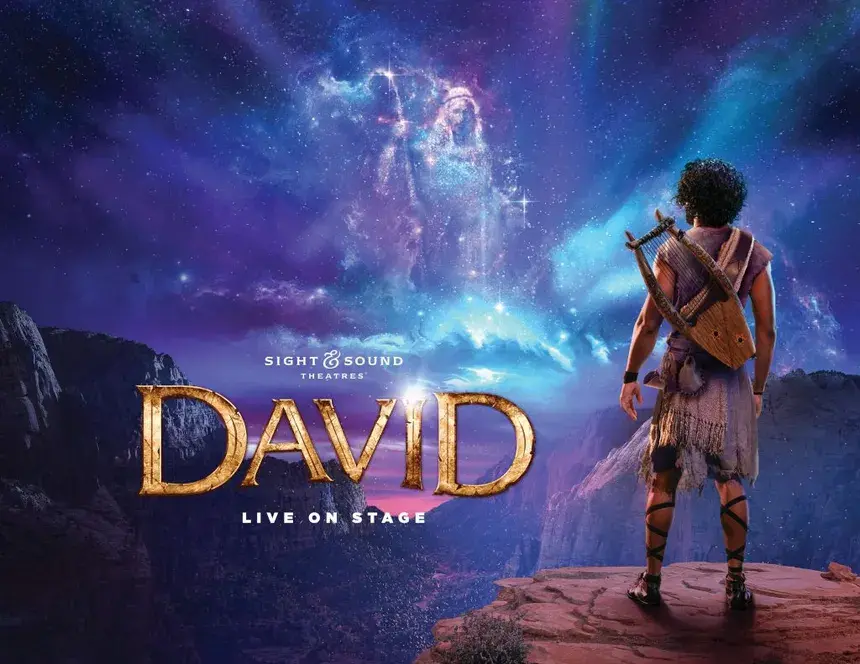
There was David, the “cinematic musical epic” that told the story of the shepherd boy who defeated Goliath and became king. Oh boy.
Dolly Parton’s Stampede sounded interesting (and who doesn’t love Dolly?), but I just couldn’t get past the idea of consuming a “four-course feast” while 32 horses kicked up a fine powder of dirt and horse shit.

There was the Showboat Branson Belle (now Silver Dollar City’s Showboat), which offered dinner and a show while paddling around Table Rock Lake. I remembered this was where Alex (who had recommended Branson) used to work. I messaged him to see if it was worth going.

There was the local production of C.S Lewis’ The Lion, The Witch, and the Wardrobe. I would normally jump at this because I loved the books as a kid. However, something about the advertising hinted (and a google search confirmed) that this adaptation leaned heavily into the Christian allegories of the work.

I finally decided on Yakov Smirnoff. For those who may not have been alive at the time, Yakov is a Ukranian stand-up comedian/actor who had a big moment in the 80s and is known for his accented one-liners, giant smile, and braying laugh.

He appeared on talk shows and in movies with Robin Williams, Richard Pryor, Tom Hanks, Jack Nicholson, and more. He was everywhere.
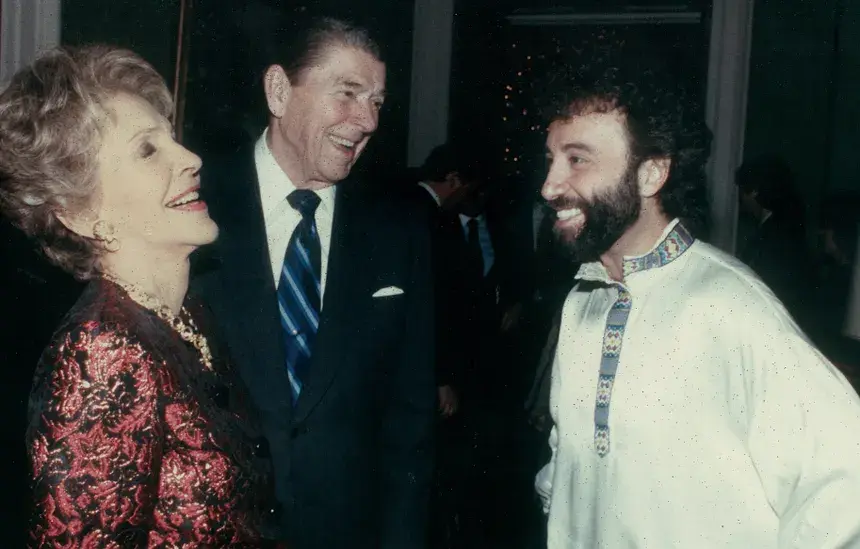
His rise to fame started with his stand-up career, which was essentially a one-note fish-out-of-water act comparing Russia with America, which landed squarely in the American Cold War zeitgeist. His tagline was “What a Country!”. For example:
"In America, you can always find a party. In Russia, the party always finds you."
In 1992, he took the millions he’d made in Hollywood and bought a newly constructed 2,000-seat theater in Branson, naming it the Yakov Theater.
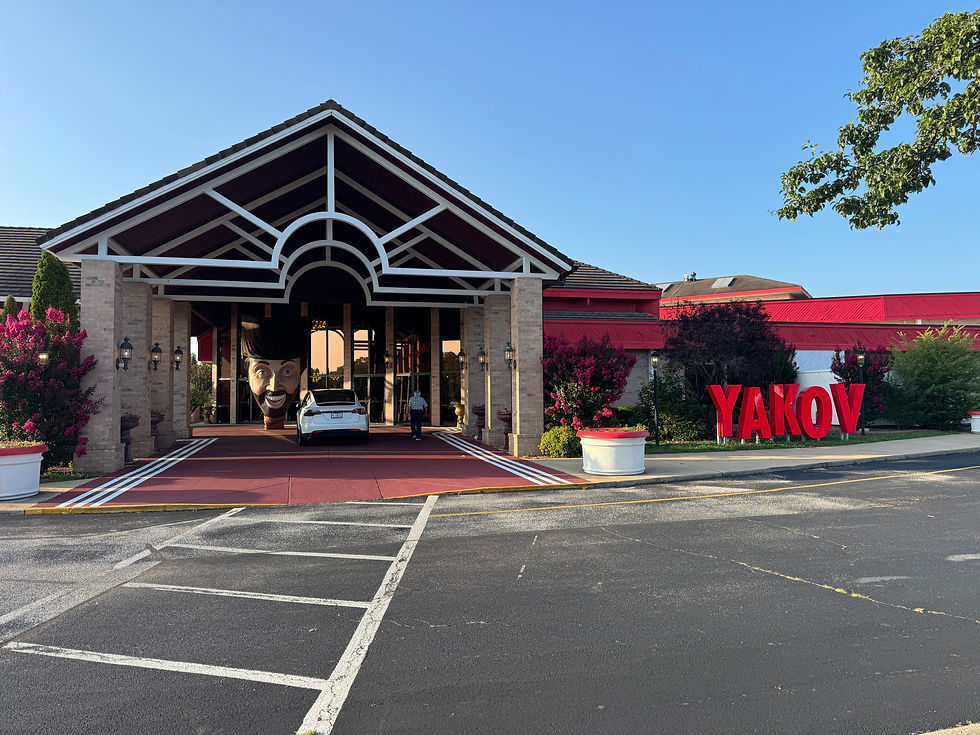
Although it hosts guest concerts and shows, it has served primarily as the home of his own variety show, currently titled Make America Laugh Again.
I showed up a bit before show time and entered the theater past the creepy six-foot caricature of his head.

I purchased a ticket and explored the gallery in the lobby displaying his paintings. Astute readers of this blog may remember back in LOUISIANA when I was confused by a poster I saw in a diner with a painting of the New York skyline and a quote from Yakov.

After 9/11 he made a tribute painting called American Heart and, at his own cost, hung a massive copy of it on a building near Ground Zero.

His paintings were a curious melange of patriotic and Christian iconography. His technicolor portrait of Jesus looked unsettlingly like himself. I wondered if that was intentional.
I took my seat and surveyed the crowd, which looked to be about 90% octogenarians and 100% white. Two big screens on either side of the stage “warmed up” the crowd with Yakov’s greatest hits from the 80’s. There was old stand-up and clips of him on The Tonight Show with Johnny Carson, and later Jay Leno, looking like a college sophmore. I could tell I was in for a treat.
The show itself was a cringe-worthy combination of monologues, song and dance numbers with a bevy of red, white and blue chorus girls, and strange skits like the mock political debate featuring bad deepfakes of Joe Biden, Donald Trump, and Bernie Sanders. It was…memorably forgettable.
At intermission he and his co-star talked to the crowd for ten minutes and blatantly hawked his books, DVDs and commemorative 2x2 inch pieces of the actual American Heart banner he’d hung in New York.
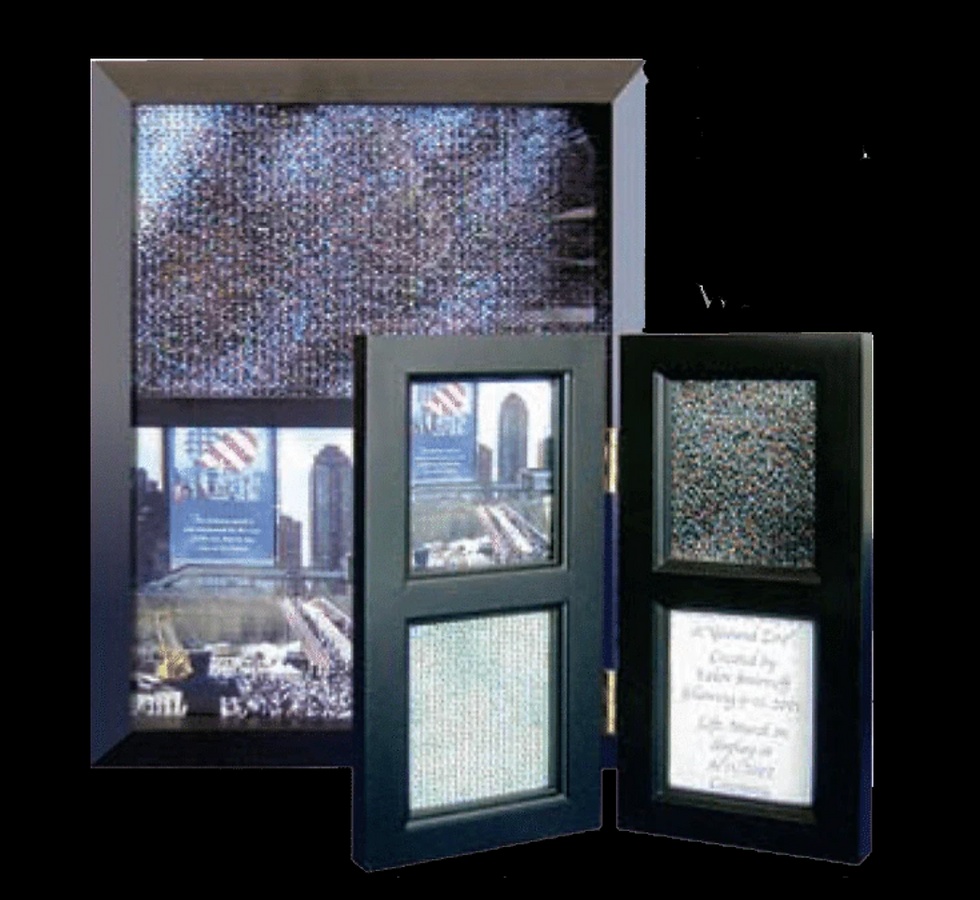
I am certain that Yakov’s love of America and God are genuine, but the way he used them pandering to the audience in order to sell his merch felt gross.
Far be it from me to begrudge a man for making a buck, but his display smacked of the disingenuous brand of rhetorical ambrosia that’s so often weaponized to bilk self-professed patriots who have never read the Constitution and so-called Christians who have never read the Bible.

I left at intermission.
The next day I checked out a cool stone and fossil shop downtown then spent the afternoon in the air conditioning at Dice & Dine, a board game cafe. Alex, a big board game guy, had strenuously recommended it. I had my most pleasurable hours in Branson noodling with games there.
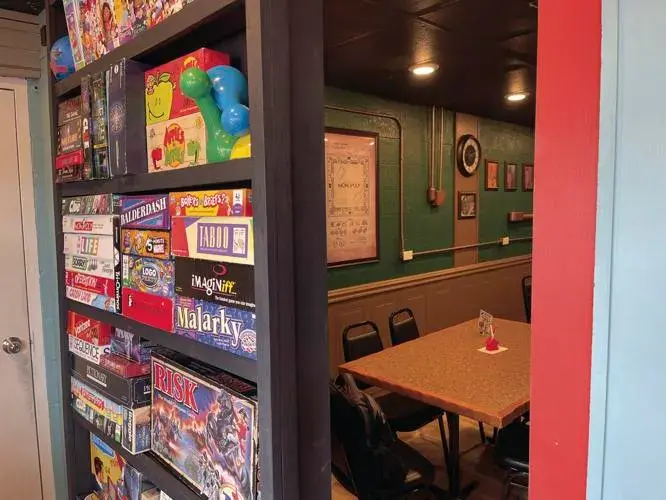
Alex got back to me and said that he’d scored a comp ticket for me on the Showboat Belle Branson, which totally wasn’t necessary but I appreciated it anyway.
It was a 20 minute drive to get to Table Top Lake. The gleaming afternoon sun made the thick air hazy and sparkled off the rippling wake of a few lone boaters.

Once I arrived and retrieved my ticket at Will Call, I boarded the boat. The owners of the Showboat Branson Belle claim that it’s the largest paddleboat on a landlocked lake in the world, and I have no reason to disbelieve them. The theater on the boat was cavernous - it seats 700 and has multiple tiers.

As we departed the dock, we were served dinner and got an intro to the evening's entertainment from the MC, Christopher James - a magician. I eye-rolled.
The food was offensively inoffensive. Rather than focusing on making GOOD food, I can only imagine they designed the menu to avoid distinct flavors that might be off-putting to sensitive or picky eaters. Like any art (and, yes I consider food art), when you dumb something down to the lowest common denominator you make bland shit.
The meal was a bare chicken breast with some flavorless mystery cream sauce, overcooked green beans, and a starch so unappealing I can’t even remember what it was. Dessert was this jellified cake thing that was gag-inducing. Truly one of the worst meals that has ever been cooked for me. Thank god I didn’t pay for it.

We had a 30 minute break to explore the ship, which was nice. The last lavender remnants of sunset caught the wispy clouds on the horizon. A few other boats puttered around, but we had the vast lake nearly to ourselves.

Then back to our seats and the show started. It was song and dance numbers by a troupe of 6 twenty-something performers backed up by a house band. The numbers weren’t to my taste, but I have to give the kids a lot of credit - they played and sang and danced their asses off like they were on Broadway. It’s hard to make a living as a performer. I am sure Branson wasn’t anyone’s first choice, but they brought the passion anyway.

Christopher James broke up the numbers with magic tricks and comedy. Despite my reservations about him being a magician, he was actually pretty decent. And, in one shining example, he told a joke that embodied the rule “Know Your Audience”.
He held up a knotted rope and told the audience to watch the rope very closely. He then quipped as an aside:
“You know, we used to put a spotlight on the rope, but we get an older crowd here in Branson and members of the audience kept walking toward the light”
Perfection.

We were nearing the end of the show and the performers busted out a huge movie song medley number - iconic music from 20 films. Their choices should tell you everything you need to know about who their target audience is. It started with "Somewhere Over the Rainbow" then aside from “Defying Gravity” from Wicked, and “Let It Go” from Frozen, the most contemporary song they used was Whitney Houston’s “I Will Always Love You” from The Bodyguard - you know, the smash hit from 1992.
After the medley, one of the performers delivered a passionate introduction to what I can only assume was the big rousing finale. He said that at the Branson Belle they believe it’s so important to give credit and pay tribute to the Glory of God. I was out.

As the opening notes rang out, I stood up and left. I’d had all the Jesus I could take for one week. I was so glad the boat had already docked because I hadn't been looking forward to the swim back.
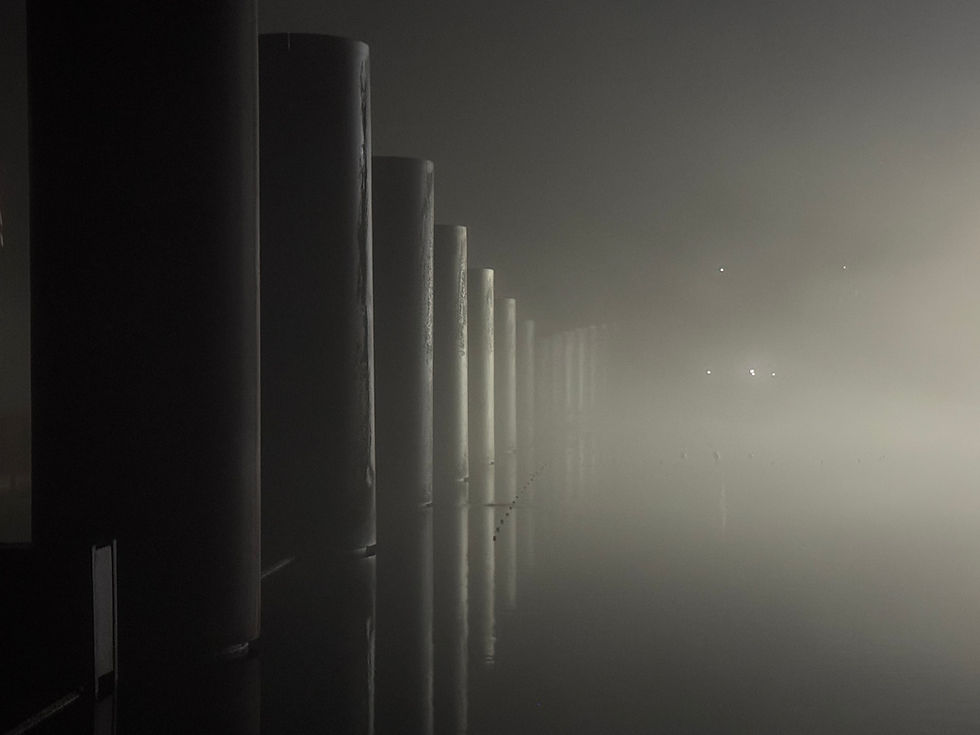
Another stop at Big Whiskey’s for a few beers. After they shut the place down at midnight I emerged to find that a thick fog had enveloped everything. I meandered through the deserted downtown taking pictures and trying to process the week I’d just had.

When I finally saw Alex again months later I asked him “Why, dude? Why in the hell did you recommend Branson?” he replied with an impish smirk “I knew you’d find it interesting”. Touché.

The more I thought about it though, the more I came to realize that my time in Branson was actually the perfect execution of the spirit of this trip. I “yes, anded” a fleeting recommendation and found myself in a corner of the country I would have never chosen to explore myself. It was a unique experience and although you’re unlikely to find me there again, I’m really glad I did it.
Yes, and…
Matt


Comments